Gardeners Islington: Recycling and Sustainable Waste Practices
 Gardeners Islington leads a practical, low-impact approach to green-space maintenance across the borough. Our focus is on creating an eco-friendly waste disposal area and a dedicated sustainable rubbish gardening area that reduces landfill, supports reuse and encourages circular resource flows. As Islington gardeners we balance horticultural excellence with measurable environmental outcomes, embedding waste reduction in everyday operations.
Our operational target is clear: a recycling percentage target of 70% by 2030 for all garden and site-generated materials, including green waste, woody debris, soils and packaging. Hitting this goal depends on robust separation at source, strategic partnerships and investment in low-footprint logistics. The target is ambitious but grounded in practical steps: on-site composting, segregation bays in the eco-friendly waste disposal area, and ongoing staff training that emphasizes the borough's approach to waste separation.
 The borough's approach to waste separation supports our work: clear streams for food waste, garden cuttings, dry recycling (paper, cardboard, glass, metal and plastics) and residual waste. In practice, our teams maintain segregated collections at site-level and use labelled containers for:
- green waste for composting and mulching
- food and catering waste to anaerobic digestion partners
- clean wood and timber for biomass processing
- metal, glass and rigid plastics recycled through municipal streams
Local Transfer Stations and Responsible Routing
We rely on nearby local transfer stations and material recovery centres to ensure that separated streams stay clean and reach the correct processing facilities. Gardeners in Islington coordinate collections so that green waste is routed to composting facilities, bulky items go to reuse hubs and recyclable packaging enters the borough's mixed recycling infrastructure. Using transfer stations reduces double-handling and cuts the carbon footprint of onward transport.
 Partnerships and Community Reuse
Our sustainable rubbish gardening area is strengthened through partnerships with charities and community organisations. We collaborate with local reuse charities, community composting schemes and social enterprises to divert serviceable items and surplus materials away from landfill. These partnerships enable reuse of soil, bricks, timber offcuts and pots, while redistributing usable furniture or planters to community projects. Strong ties with reuse networks amplify the impact of every load we divert from disposal.
A practical example is coordinated collection days where surplus soil and potted plants are offered to community gardens, and timber offcuts are channelled to training programmes that teach repair and upcycling skills. These activities reflect our commitment to circular economy principles while supporting local social value objectives.
Low-emission logistics are a cornerstone of our plan. Our fleet is transitioning to low-carbon vans, including electric vehicles for short urban hops and plug-in hybrids for heavier loads. Vehicle choice is complemented by route optimisation software and consolidated pickups at transfer stations, cutting fuel use and emissions from multiple stop-start journeys. As Islington gardening teams move to an electrified fleet, roadside noise and nitrogen oxides fall, making operations greener and more community-friendly.
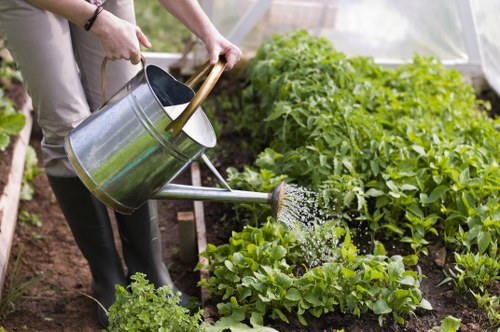 On-site practices in the sustainable rubbish gardening area include structured compost bays, leaf-mould trenches, and secure containment for contaminated soils pending testing. Contaminated or treated soils are minimised through prevention, but when encountered they are segregated and sent to licensed facilities for remediation or specialist reuse. We use certified composting processes to produce soil conditioners that return nutrients to local plots, closing the loop between green waste and productive urban soil.
 Monitoring and transparency are vital to deliver our recycling percentage target. Regular waste audits, tonnage reporting and operational reviews track progress against the 70% goal. We publish anonymised performance summaries for internal governance and to inform procurement choices. By measuring what we collect and where it goes, Islington gardeners continuously improve separation rates, reduce contamination and increase the volume of materials that are reused or processed sustainably.
Gardeners-Islington practices also emphasise materials substitution and reduction: choosing durable planters, recycled-content mulches, and minimal packaging on supplies. Stock management prevents over-ordering and ensures surplus plant materials are offered to community groups before disposal. Minimising incoming waste, combined with efficient on-site segregation, makes the eco-friendly waste disposal area a productive asset rather than a cost centre.
To sustain momentum we invest in staff training on waste streams and maintain active relationships with local transfer stations and charity partners. Our low-carbon vans are supported by charging infrastructure planning, and procurement prioritises materials that are recyclable or easily repurposed. These coordinated measures ensure Gardeners Islington contributes to borough-wide sustainability objectives while delivering healthy, attractive green spaces.
Ultimately, the combination of targeted recycling goals, strategic use of transfer stations, strong charity partnerships and low-emission logistics creates a resilient, circular approach to garden waste. Whether stated as Gardeners in Islington or Islington gardeners, our teams are committed to turning green waste into value—compost, reused materials, and reduced emissions—so neighbourhoods enjoy better, cleaner and more sustainable outdoor spaces.

